
The CJEU on copyright protection of design works in Mio and USM Haller
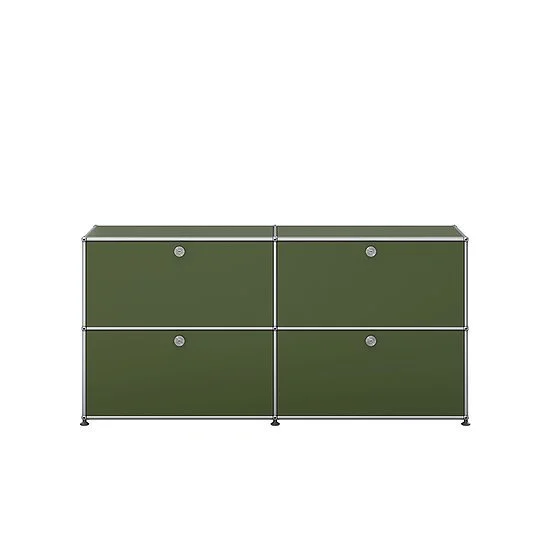
On 4 December 2025, the Court of Justice of the European Union returned to the question of copyright protection for design works in joined cases C-580/23 and C-795/23. In that judgment, the Court reiterates principles previously articulated in Cofemel and Brompton Bicycle (see here and here on this blog) and seeks to clarify (i) how the originality of a design object is to be assessed for copyright purposes and (ii) how infringement is to be established.
Key points set out in the judgment
1. There is no rule/exception relationship between design protection and copyright protection, but rather a requirement to satisfy different legal conditions. A design object may qualify as a ‘work’ protected by copyright if it meets the same originality requirement as any other creation, without any ‘special’ or heightened threshold merely because it falls within the field of applied art.
2. In order to be a ‘work’ protected by copyright, the subject matter must: (i) be identifiable with sufficient precision and objectivity; and (ii) be original, in that it reflects the author’s personality as an expression of his or her free and creative choices. As regards the second condition, the Court notes the following:
· The creative nature of the author’s choices cannot be presumed: the court must seek out and identify the free and creative choices in the shape of the subject matter.
· Factors such as any artistic value of the product, the author’s stated intentions, the presentation of the product in museums or exhibitions, or its recognition by experts may be taken into account where appropriate, but they are not, as such, necessary or decisive.
· Where the form is dictated by technical requirements, rules or other constraints leaving no room for creative freedom, the subject matter is not original. However, the mere fact that the object addresses a technical problem does not, in itself, preclude the author from making free and creative choices that are reflected in the object.
· The use of shapes already available on the market does not automatically exclude originality: subject matter composed of ‘available’ or ‘known’ shapes may be original where the arrangement of those shapes reflects the author’s free and creative choices.
· Where the work is a variant of pre-existing creations, copyright protection extends only to the author’s own creative elements of the subsequent work.
· The ‘degree’ of originality (high or low) is irrelevant: once the minimum threshold is met, the scope of copyright protection is the same.
· The fact (or likelihood) that other authors have created, or could create, similar subject matter independently may be a relevant indication of a low degree of originality, but it is not sufficient, on its own, to deny protection.
3. Unauthorised use of a work may constitute infringement even where it concerns a relatively minor element, provided that element expresses the author’s own intellectual creation. To establish infringement, the court must therefore identify the original creative elements of the protected work and verify whether those elements have been reproduced in a recognisable manner in the contested object. By contrast, it is not decisive to ask whether the two objects create the same overall impression, a criterion which pertains to design protection.
Significance and practical issues raised by the decision
The judgment is an important confirmation that, for design works, the copyright ‘entry threshold’ is the same as for other works: no additional requirements (such as the ‘artistic value’ filter traditionally applied in Italy to industrial design) and no more stringent creativity threshold than, for example, for a painting or a musical composition.
However, the judgment gives rise to a number of practical difficulties:
· the Court does not indicate, in concrete terms, how the author’s creative choices are to be established. The originality assessment risks becoming highly discretionary and, above all, evidentially burdensome for businesses that must demonstrate - often years later - what the free and creative choices were at the design stage.
· A similar difficulty arises when courts assess copyright infringement, once again having to identify - and compare - the individual creative choices embodied in the objects under comparison.
· Finally, from the perspective of Italian copyright law, the Court’s approach to derivative works may create some tension. Under Article 4 of the Italian Copyright Act, Italian courts tend to protect creative elaborations of pre-existing works in their entirety, without isolating the ‘new’ creative choices made in the elaboration vis-a-vis the pre-existing work. In substance, what matters is the presence of an autonomous creative contribution capable of transforming the starting work into something recognisably new. If the new version remains too close to the original, no protectable derivative work arises; if, however, the elaboration is sufficiently ‘distanced’, the new work is protected in full.
In conclusion, we can expect that the CJEU will be called upon to provide further clarifications in the future.