With an order of October 6th, 2026 (issued in interim proceedings under docket No. 12302/2026), the Court of Bologna dismisses the application brought by the owner of “MONSTERLAND HALLOWEEN FESTIVAL” trademark, who organises the event by the same name, against the organisers of a competing event, for the use of allegedly similar signs, confusing and parasitic unfair competition. According to the Court, the differences between the signs used, together with the weak distinctive character of the earlier trademark, rules out any likelihood of confusion. The Court also excludes parasitic unfair competition, noting that the respondents themselves contributed to organising previous editions of the festival arranged by the applicant.
The background
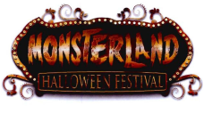
Monsterland is not only a festival dedicated to Halloween, launched in Milan in 2009, moved to Ferrara and eventually transferred to Monza, but it is also a figurative trademark registered in Class 41 (education; training; entertainment; and sporting and cultural activities), reproduced below.
Over the years, several collaborators joined the founder of the original project. In 2023, the latter and one of the aforementioned collaborators, set up a company in which they each hold an equal stake in order to manage joint business ventures. The collaboration nevertheless comes to an end in 2024, following disagreements between the parties.
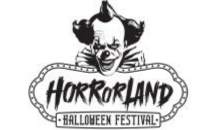
From 2025 onwards, the event’s founder and the company managed by him organize Monsterland Halloween festival at Imola’s Motor Racing Circuit, while, in the same year, the former collaborators organise a competing event in Ferrara (which was the venue for the previous editions of Monsterland), “Horrorland”, using the sign reproduced below to identify it, which was also filed as a trademark.
In 2025, however, the owners of the Monsterland project obtained an interim injunction from the Court of Bologna prohibiting the competitors from using the Horrorland sign on the grounds that it infringed their registered trademark.
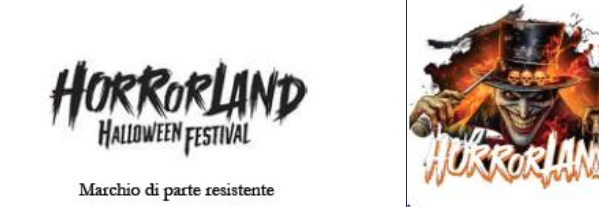
Accordingly, for the 2026 edition of their Ferrara festival, the competitors modified Horrorland’s distinctive signs, creating the two versions reproduced below (the first of which was also filed as a trademark application):
The owners of the Monsterland project, however, believe that the new signs also infringes their trademark and that the new methods used to promote Horrorland festival amount to confusing and parasitic unfair competition (with particular reference to certain elements such as the full-screen video on the homepage, the countdown, the links to purchase tickets and the slogan). They therefore bring a new application for interim relief before the same Court, seeking not only an injunction against the use of the new signs, but also changes to the way the event was promoted and the withdrawal of the advertising material.
The applicants argue that the distinctive signs and promotional elements mentioned above are liable to cause confusion among the public and enable the respondents to take advantage of the investment, creativity and goodwill built up around the original festival.
This time, however, the outcome of the proceedings is overturned.
The decision of the Court of Bologna
Firstly, the Court rules out both trademark infringement and confusing unfair competition.
The premise of the Court’s reasoning is that “Monsterland Halloween Festival” is a weakly distinctive trademark because it consists of elements that are common or conceptually related to the goods and services concerned. Accordingly, only minor modifications or additions to other signs are needed to rule out confusion with the Monsterland trademark.
In the case at hand, the respondent’s signs share with the applicant’s signs elements of weak distinctive character, such as “Land” and “Halloween Festival”, although these are represented in a different graphic style. The signs nevertheless differ in their other components: firstly, both use the word “Horror” instead of “Monster”; furthermore, the unregistered sign depicts a wizard in a top hat, a striking image absent from the applicant’s trademark, while the registered sign differs from it in its graphic design and colours and in the absence of a luminous frame (a frame which, by contrast, was one of the elements found to be notably similar to the earlier version of the same trademark in the 2025 decision).
Parasitic unfair competition
The Court also dismisses the claim based on Article 2598(3) of the Italian Civil Code, concerning the alleged systematic exploitation of another party’s work and investment.
Parasitic unfair competition does not necessarily require the signs to be confusingly similar but presupposes the systematic imitation of a competitor’s initiatives in a manner that breaches the principles of fair professional conduct.
In the present case, however, the Monsterland festival was organised between 2019 and 2024 with the business contribution of both parties to the proceedings. The Court therefore holds that the applicants cannot claim the initiative as their exclusive property and that the subsequent organisation of a competing event constitutes the independent development of a previously shared project, rather than the systematic imitation of another party’s business activity.
Having found that the fumus boni iuris (prima facie case) is lacking, the Court dismisses the application for interim relief, considering it unnecessary to examine the periculum in mora (urgency/risk of harm pending the proceedings).
The decision thus reiterates two principles: the protection afforded by a registered trademark and the rules on unfair competition cannot be relied upon to secure exclusive rights over descriptive or evocative signs, nor to prevent a competitor from independently pursuing a business initiative whose conception or implementation that competitor previously helped bring about.
The author has no information as to whether an appeal has been lodged against the order discussed in this article.
