
In judgment No. 2051 of 30 June 2026, the Milan Court of Appeal recognised copyright protection for several Ferrari car designs, once again addressing the relationship between the “artistic value” requirement under Article 2(10) of the Italian Copyright Act and the case law of the Court of Justice of the European Union (CJEU).
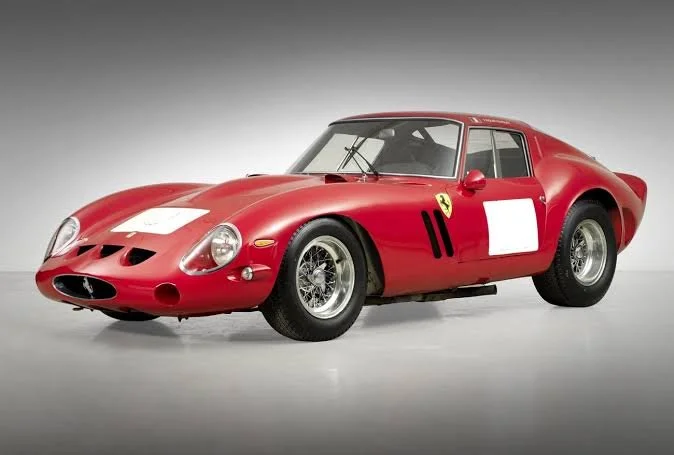
The dispute concerned the production and marketing of scale models of Ferrari cars by a former licensee. The Court upheld the copyright protection recognised at first instance for the Ferrari 250 GTO and the Testarossa and extended it to the Ferrari 250 GT Berlinetta Passo Corto/SWB and the California Spyder. It denied protection, however, to three racing cars: the Ferrari 500 F2, Dino 156 F1 and Ferrari 312 P.
In reaching this conclusion, the Court recalled that, under Italian law and case law, design works must possess not only creativity but also artistic value to qualify for copyright protection. Artistic value may be inferred from objective indicators such as museum exhibitions, awards, specialist publications and particularly high market valuations.
However, the Court acknowledged that, according to the CJEU case law already discussed on this blog, particularly in Cofemel and Mio/USM Haller, copyright protection requires only that a work be original, in the sense that it reflects its author’s free and creative choices, and identifiable with sufficient precision and objectivity. The CJEU has also made clear that design works cannot be subject to stricter requirements for protection than other copyright works. In particular, the Mio judgment clarified that awards, exhibitions and professional recognition may contribute to the assessment of originality, but are neither necessary nor decisive, since they are circumstances external to, and subsequent to, the creation of the work.
In seeking to reconcile these two approaches, the Court of Appeal therefore gave precedence to originality, considering that artistic value may serve as ex post confirmation of it, arising from the subsequent “historicisation” of the work and its recognition as a cultural or social icon.
Applying these principles, the Court found the shapes of the four protected cars original, identifying specific aesthetic choices not dictated by functional requirements and finding confirmation in artistic recognition, museum exhibitions and high auction prices. As for the three racing cars, it held that the existence of creative choices independent of technical and aerodynamic constraints had not been sufficiently established, making it unnecessary to assess artistic value.
The decision therefore appears to mark a development compared with other Italian precedents, expressly giving priority to originality and relegating artistic value to a corroborating role. This approach thus seems closer to EU principles than that adopted by the Venice Court in the Kartell Componibili case, recently discussed on this blog, which continued to require artistic value as an independent condition for protection.
Nevertheless, there remains a risk that, even when artistic value is treated merely as corroboration of originality, it may in practice be given excessive weight, favouring iconic, long-established products over more recent design works that have not yet received comparable recognition.